Today is July 2, which is the birthday of Hannes Bok (1914-1964) and C. M. Kornbluth (1923-1958). They both died far too young. Continue reading
Bok and Kornbluth
1 Reply

Today is July 2, which is the birthday of Hannes Bok (1914-1964) and C. M. Kornbluth (1923-1958). They both died far too young. Continue reading
Today is July 1. It is the birthday of A. M. Burrage (1889-1956), Otis Adelbert Klein (1891-1946), and James M. Cain (1892-1977). This will be a brief look at each becasue one, it’s late and I want to go to bed, and two, I need to keep my wriitnng streak up. Continue reading
No, I’m not posting two essays today. I wrote the Howard Days post the other night and was so tired I neglected to hit PUBLISH. Logged on tonight and realized the mistake.
Today (June 30) is a simple birthday post for Sam Moskowitz (1920-1997) and Dave Duncan (1933-2018). Continue reading
Today is June 27, and it is the birthday of three writers: Robert Aickman (1914-1981), James P. Hogoan (1941-2010), and Mary Rosenblum (1952-2018). Let’s take a breief look at each of them. Continue reading
 Today is June 21, the birthday of CleveCartmill (1908-1964).
Cartmill wrote science fiction in the forties and fifties. His first story, “Oscar”, was published in Unknown in 1941. His last was published in the mid-fifties. His most productive years were during teh Second World War. He didin’t have anything published from 1945 to 1949.
Cartmill would probably be completely forgotten these days if it weren’t for one particular story, “Deadline”, which was published in March 1944 issue of Astounding.
The story concerns the building of an atomic bomb.
One year before the first bomb was detonated. The Mahattan Project was going full swing at this time and was a very top secret project.
 Legend has it that the FBI paid John Campbell a visit. Supposedly Campbell used a high school physics textbook to show them that everything in the story could be deduced logically from readily available information.
I don’t remember where I read it, but I saw something a number of years ago where a woman working for the ARmy at the time tried to check out that particular issue of Astounding from the base library and wasn’t allowed to because she didn’t have a high enough security clearance.
So, she went across the street from the base and bought a copy at a drug store or newstand or something.
That may not be a true story, but it’s a good story.
Sadly, Cartmill’s work isn’t easily available. There are a couple of ebooks, and that’s all I found. Darkside Press was going to publish all his short fiction about twenety years or so ago, but they only published one volume.
 Today, as I write this, it is June 10. That makes it the birthday of Kage Baker (1952-2010). She had a short career. Her first story was published in 1997.
It’s been said that some people’s careers are so short because they are so bright. That was certianly the case with Kage Baker. Most of her work is set in a future called the Company future. The main part of the series involved immortal time-traveling cyborgs.
Can it get much better than that? Maybe, but there aren’t many contenders. The series involves cyborgs working in the shadows of history. Things believed lost for years, manuscripts, paintings, artifacts, stuff like that, are suddenly found. Because a cyborg agent hid the item. They can do this because the item has vanished from the historical record. They don’t try to change the past.
The series has amultiple characters that interact throughout novels, movellas, and short stories. There is an overaching storyline. The cyborgs know that something is going to happen several hundred years from our present, but they don’t know what. The finale of the series is sthe big reveal.
She was beginning to write in other series than the Company and in spin-offs in the Company future after she brought the Company series to its conclusion. (I was disappointed with the finale.)
Kage Baker is one of my favorites. I had the pleasure of meeting her at Armadillocon 25 a few years before her death from uterine cancer.
Her work has mostly fallen out of print but should be available in electronic editions and on the secondary market. Kage Baker had a unique voice, and I’ve not read anyone like her before or since. She is one of the writers whose work I tend to buy when I come across even though I have most of her books in the original hardcovers. Reading copies are always welcome.

Today, June 9, is the birthday of Keith Laumer (1925-1993). Laumer was a prolific science fiction writer back in the latter half of the Twentieth Century. Laumer is best known for the Retief series about a two-fisted diplomat and the Bolo series about sentient tanks.
He is pretty much out of print these days. That’s a shame, because I think his nonseries work is some of his best, especially at shorter lengths.
One of Laumer’s favorite subgenres was time travel, and he wrote a number of time travel stories. Preeminent among them was Dinosaur Beach.
Laumer also tended to write military sceince fiction, which is a Duh! since he created the Bolos. He was friends with Gordon R. Dickson, and they collaborated on the novel Planet Run.
About twenty or so years ago, Baen reprinted many of Laumer’s works in omnibus editions edited by Eric Flint. Those are worth picking up if you can find them. That shouldn’t be hard. I jsut checked and found out I missed one. Picked it up for just under ten bucks.
Todayis April 26, the birthday of A. E. Van Vogt (1912-200) and Horace L. Gold (1914-1996).
 Alfred Elton Van Vogt was born in Winnipeg, Manitoba, Canada. He was one of the major writers of science fiction in the early forties. His best known work was published in Astounding. His two novels about the weapon makers of Isher are classics of libertarian science fiction.
Slan was a novel about mutants that fandom idnetified with. At conventions, tehy are reported to chant “Fans are Slans!” becuase they felt they were superior to ordinary people, whom they called “mundanes”.
Van Vogt also wrote a great deal of short fiction. He got involved in dianetics for a while. His reputatoin as a writer never recovered when he caem back to writing. Baen published several omnibus collections of his works and Tachyon Press has a collection of his short stories in print.
 Horace L. Gold started out as a writer (see my review of “The Trouble with Water”) who went on to be the first editor of Galaxy magazine from 1950 until 1961. It is in that capacity that he is remembered today. Gold’s run on Galaxy saw the publication of a number of stories by the biggest names in science fiction, stories that went on to be soncisered classics.
One habit Gold had that irked Fred Pohl to no end was his tendency to change the titles of stories.
Are there any stories Van Vogt wrote or that Gold published that you are paprticularly fond of? Or maybe not fond of?
Today is April 24, the birthday of A. C. Benson (1862-1925) and Sue Grafton (1940-2017).
 Arthur Christopher Benson is the brother of R. H. Benson and E. F. Benson. All three wrote ghost stories. E. F. is the better known of the three. He was also the most prolific having enough to fill four or five collections. A. C. and R. H. have had their ghost stories published together in a single volume. Twice, as it turns out, although the ISFDB doesn’t list Ghosts in the House, published by Ash-Tree Press. That was the volume that introduced me to them.
It strikes me as odd that Ghosts in the House isn’t listed on the ISFDB under either A. C or R. H. Benson. They are usually more thorough than that.
But I digress.
All the Bensons wrote good ghost stories. They are, of course, in the classic English tradition. And well worth reading.
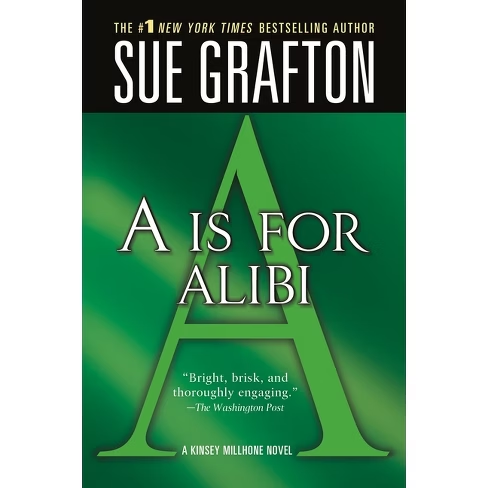 Sue Grafton created one of the first female private investigators in the character of Kinseu Milhone. The gimmick she used in selecting titles was to use the format Letter is for Someting. Her intention was to write twenty-six books, one for each letter of the alphabet. “Y” was the last volume she completed before her death.
I’ve only read a few of the short stories. I enjoyed them. I’ll be reading the novels. At the church garage sale a couple of weeks ago, my wife picked up most of the set. I’m not sure if she has all of them, but she has the first ones. That’s good enough for me.
Today is April 23. It is the birthday of Talbot Mundy (1879-1940) and Avram Davidson (1923-1993). Both are writers who should not be forgotten. Continue reading