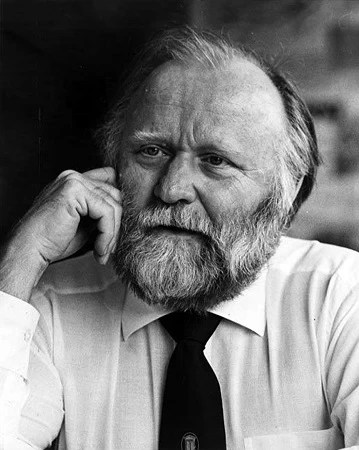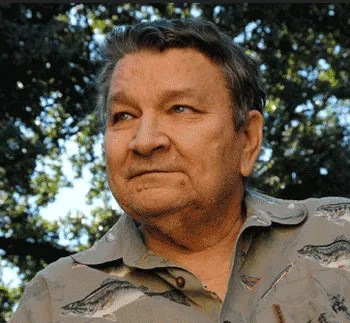
Today, is July 11. In addition to being my brother’s birthday, it’s also the birthday of Hugh B. Cave (1910-2004), Cordwainer Smith (1913-1966), and Roy G. Krenkel (1918-1983). Two writers and oen aritist. Here”s a brief look at each. Continue reading
Tag Archives: birthday
Wyndham and Jacobi
Today is July 10, the birthday of John Wyndham (1903 -1969) and Carl Jacobi (1908-1997). Both wrote some higly regarded stories. Wyndham wrote science fiction. Jacobi wrote fantasy and horror. Continue reading
Cook and Koontz
Today is July 9. I don’t normally do birthday posts for living writers.
But it’s my blog, and I can do what I want. And I want to acknowledge the birthdays of two of my favoirte writers.
Glen Cook (b. 1944) and Dean Koontz (b. 1945).
Glen Cook is the author of the Black Company sereis, the Dread Empire series, The Instrumentalities of the Night series, adn the Garrett, PI series. Along with a number of other novels. If you haven’t read him yet, what are you waiting for?
Dean Koontz needs no introduction. He was been writing for at elast fifty years. I’ve only started reading his work in the last few years, and I regret watiing so long. He’s a writer my writing mentors encourage other writers to study.
So, Mr. Cook and Mr. Koontz, happy birthday!
Morrow and Heinlein
Today is Julyl 7. It is the birthday of W. C. Morrow (1854-1923) and Robert A. Heinlein (1907-1988).
Morrow wrote weird fiction. He wasn’t very prolific, and I’m not sure how easy his work will be to find these days. The last English publication of his works was in 2012. The most complete collection of his short fiction seems to have been His Unconquerable Enemy in 2006 from Midnight house. The print run was only 460 copies, and I don’t want to think about what it would cost today, assuming you can find a copy. Midnight House books are collectible.
“His Unconquerable Enemy” is the story he is best known for these days. If this had been the only story Morrow had written, it would be enough to keep him from total obscurity.
I read it over foroty years ago, and I can still remember where I was when I read it. I read it in Horror Times Ten, edited by Alden H. Norton.
Sitting in the middle of a gravel road, waiting for the crop duster to come back with another load of spray. I was working as a flagger that summer. Several of us would walk waving yellow flags on tall poles so the crop duster could spray mesquites in a pasture and get a good coverage. I would always carry a paperbak in a backpack so I could read between loads. I was walking along the fence, staying in the road so I could see any snakes that might take exception to my presence.
[SPOILER ALERT]
The story concerns a man who has offended an Indian rajah. The rajah has the man’s arms and legs amputated and keeps him in a large birdcage suspended in the throne room. One particularly hot night the rajah decides to sleep in the throne room because it isw cooler there. The story is told from the point of view of a visitor who happens to see how the amputee gets his revenge.
The amputee gets the bridcage swinging. He uses his teeth to open the door of the cage. With perfect timing, he thrusts himself out of the cage so that he lands on the rajah’s chest.
And uses his teeth to tear the rajah’s throat out.
Pretty grisly stuff.
[END SPOILER]
Morrow showed his skill in making the story believable and suspenseful. It made enough of an impression on me that I can remember the story and where I was when I read it. This story has been reprinted many times, most recently in 2024.
Robert A. Heinlein once cast a long shadow of the science fiction field. To some extent he still does. But its been nearly forty years since his death. His books are mostly out of print. Starship Troopes, Stranger in a Strange Land, The Moon is Harsh Mistress, and maybe a few others.
I saw a post a few years ago where the author, whom I will not name out of courtesy (most of you would recognize the name), said he thought Heinleiin would become a forgotten author.
Is that really true?
It’s pretty much a given, I think, that when a writer dies, only the best, or most notorious, of his works (or hers) will stay in priint, and those are what they author will be remembered for. There are exceptions, of course, but by and large, that has been the trend I’ve seen.
But will Heinlein be forgotten?
Sure, many of his ideas are out of favor these days. That could be said of most writers who worked in the middle of the Twenntieth Century. Fiction gets dated.
A certain author, who will also remain unnamed except that I’ll say they recently won a major award for essentially lifetime achievement even though their career hasn’t been as long as previous winners, said they read one of his books and found it to be, if I recall the quote correctly, “racist as f***”. I thought at they time they probably read Farnham’s Freehold. I found out later that was the book.
Yes, some, probably most, of Heinlein’s works may be forgotten. But will all of them? Will he?
I don’t know. I don’t care for everything I’ve read by him, but I do like his work. I haven’t read much of what he wrote the last decade or so of his life. I may not, since what I know about some of the books makes me think they won’t be to my taste.
But as influential as Heinlein was, I hope he isn’t completely forgotten.
Bok and Kornbluth
Today is July 2, which is the birthday of Hannes Bok (1914-1964) and C. M. Kornbluth (1923-1958). They both died far too young. Continue reading
Burrage, Klein, Cain
Today is July 1. It is the birthday of A. M. Burrage (1889-1956), Otis Adelbert Klein (1891-1946), and James M. Cain (1892-1977). This will be a brief look at each becasue one, it’s late and I want to go to bed, and two, I need to keep my wriitnng streak up. Continue reading
Moskowitz and Duncan
No, I’m not posting two essays today. I wrote the Howard Days post the other night and was so tired I neglected to hit PUBLISH. Logged on tonight and realized the mistake.
Today (June 30) is a simple birthday post for Sam Moskowitz (1920-1997) and Dave Duncan (1933-2018). Continue reading
Aickman, Hogan, and Rosenblum
Today is June 27, and it is the birthday of three writers: Robert Aickman (1914-1981), James P. Hogoan (1941-2010), and Mary Rosenblum (1952-2018). Let’s take a breief look at each of them. Continue reading
Cleve Cartmill
Today is June 21, the birthday of CleveCartmill (1908-1964).
Cartmill wrote science fiction in the forties and fifties. His first story, “Oscar”, was published in Unknown in 1941. His last was published in the mid-fifties. His most productive years were during teh Second World War. He didin’t have anything published from 1945 to 1949.
Cartmill would probably be completely forgotten these days if it weren’t for one particular story, “Deadline”, which was published in March 1944 issue of Astounding.
The story concerns the building of an atomic bomb.
One year before the first bomb was detonated. The Mahattan Project was going full swing at this time and was a very top secret project.
Legend has it that the FBI paid John Campbell a visit. Supposedly Campbell used a high school physics textbook to show them that everything in the story could be deduced logically from readily available information.
I don’t remember where I read it, but I saw something a number of years ago where a woman working for the ARmy at the time tried to check out that particular issue of Astounding from the base library and wasn’t allowed to because she didn’t have a high enough security clearance.
So, she went across the street from the base and bought a copy at a drug store or newstand or something.
That may not be a true story, but it’s a good story.
Sadly, Cartmill’s work isn’t easily available. There are a couple of ebooks, and that’s all I found. Darkside Press was going to publish all his short fiction about twenety years or so ago, but they only published one volume.
Remembering Kage Baker
Today, as I write this, it is June 10. That makes it the birthday of Kage Baker (1952-2010). She had a short career. Her first story was published in 1997.
It’s been said that some people’s careers are so short because they are so bright. That was certianly the case with Kage Baker. Most of her work is set in a future called the Company future. The main part of the series involved immortal time-traveling cyborgs.
Can it get much better than that? Maybe, but there aren’t many contenders. The series involves cyborgs working in the shadows of history. Things believed lost for years, manuscripts, paintings, artifacts, stuff like that, are suddenly found. Because a cyborg agent hid the item. They can do this because the item has vanished from the historical record. They don’t try to change the past.
The series has amultiple characters that interact throughout novels, movellas, and short stories. There is an overaching storyline. The cyborgs know that something is going to happen several hundred years from our present, but they don’t know what. The finale of the series is sthe big reveal.
She was beginning to write in other series than the Company and in spin-offs in the Company future after she brought the Company series to its conclusion. (I was disappointed with the finale.)
Kage Baker is one of my favorites. I had the pleasure of meeting her at Armadillocon 25 a few years before her death from uterine cancer.
Her work has mostly fallen out of print but should be available in electronic editions and on the secondary market. Kage Baker had a unique voice, and I’ve not read anyone like her before or since. She is one of the writers whose work I tend to buy when I come across even though I have most of her books in the original hardcovers. Reading copies are always welcome.